
In an era where scalability, resilience, and automation are the pillars of enterprise IT, Esri brings GIS infrastructure into the cloud-native fold with ArcGIS Enterprise on Kubernetes 11.4. This modern deployment model is purpose-built for organizations already embracing Kubernetes orchestration and looking to elevate their geospatial capabilities through containerized, microservices-based architectures.
ArcGIS Enterprise on Kubernetes is not just a port of traditional ArcGIS architecture into containers—it’s a ground-up redesign to align with the Kubernetes operating model. Unlike classic Windows or Linux VM-based deployments, this version decomposes core ArcGIS components into independent microservices, each running in its own container and orchestrated by Kubernetes.
Key components such as:
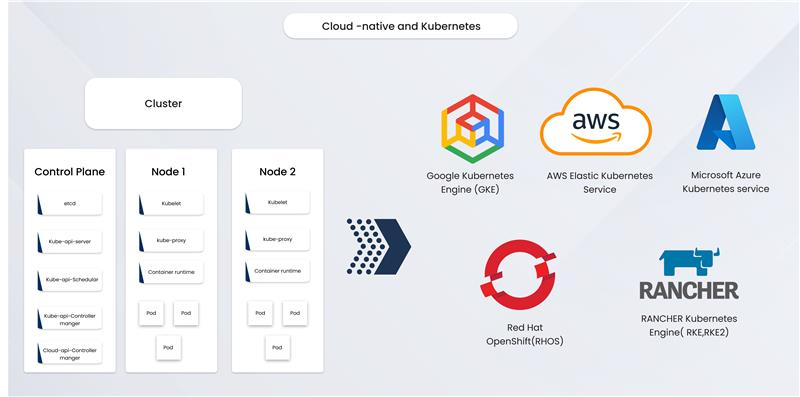
Why Kubernetes + ArcGIS = A Future-Proof GIS Stack
Kubernetes offers a robust framework for running complex, distributed systems like ArcGIS Enterprise. By leveraging Kubernetes, ArcGIS Enterprise gains the following advantages:
Pods running GIS services are monitored by Kubernetes. If a container crashes or becomes unresponsive, Kubernetes automatically restarts it, ensuring high availability with no manual intervention.
ArcGIS deployment states (e.g., desired service replicas, resource limits) are defined in declarative YAML files and managed through Kubernetes control loops. This aligns perfectly with Infrastructure as Code (IaC) practices, enabling automated, repeatable deployments.
Need more rendering power during peak load? Kubernetes enables horizontal pod autoscaling, automatically increasing or decreasing ArcGIS service instances based on CPU/memory usage or custom metrics.
Through Kubernetes’ native rolling update mechanisms, new versions of ArcGIS services (patches, upgrades) can be deployed without downtime, minimizing disruption to end users.
Each microservice in ArcGIS Enterprise can be allocated specific CPU and memory resources, managed via Kubernetes resource quotas and limits, optimizing infrastructure usage and reducing costs.
How It Works: Kubernetes Architecture in ArcGIS Enterprise
Here’s a simplified breakdown of how ArcGIS Enterprise utilizes Kubernetes constructs:
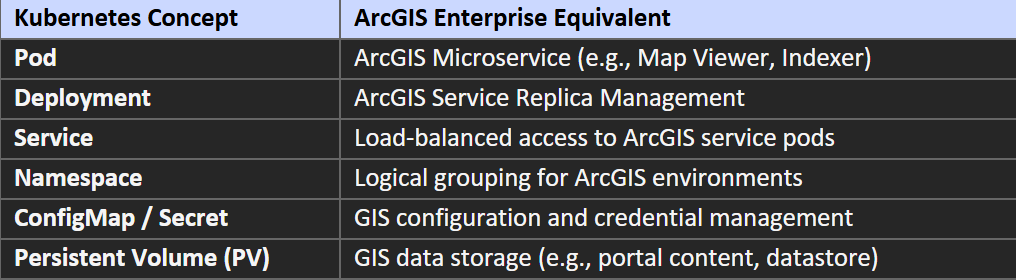
ArcGIS also uses Kubernetes Operators for service orchestration and cluster-level tasks like managing the ArcGIS Data Store lifecycle or scaling backend services.
ArcGIS Enterprise on Kubernetes is ideal for organizations that:
From a user perspective, whether analysts, field operators, or decision-makers—nothing visibly changes. They will continue accessing:
The transformation is behind the scenes, in how the system is deployed, scaled, and maintained.
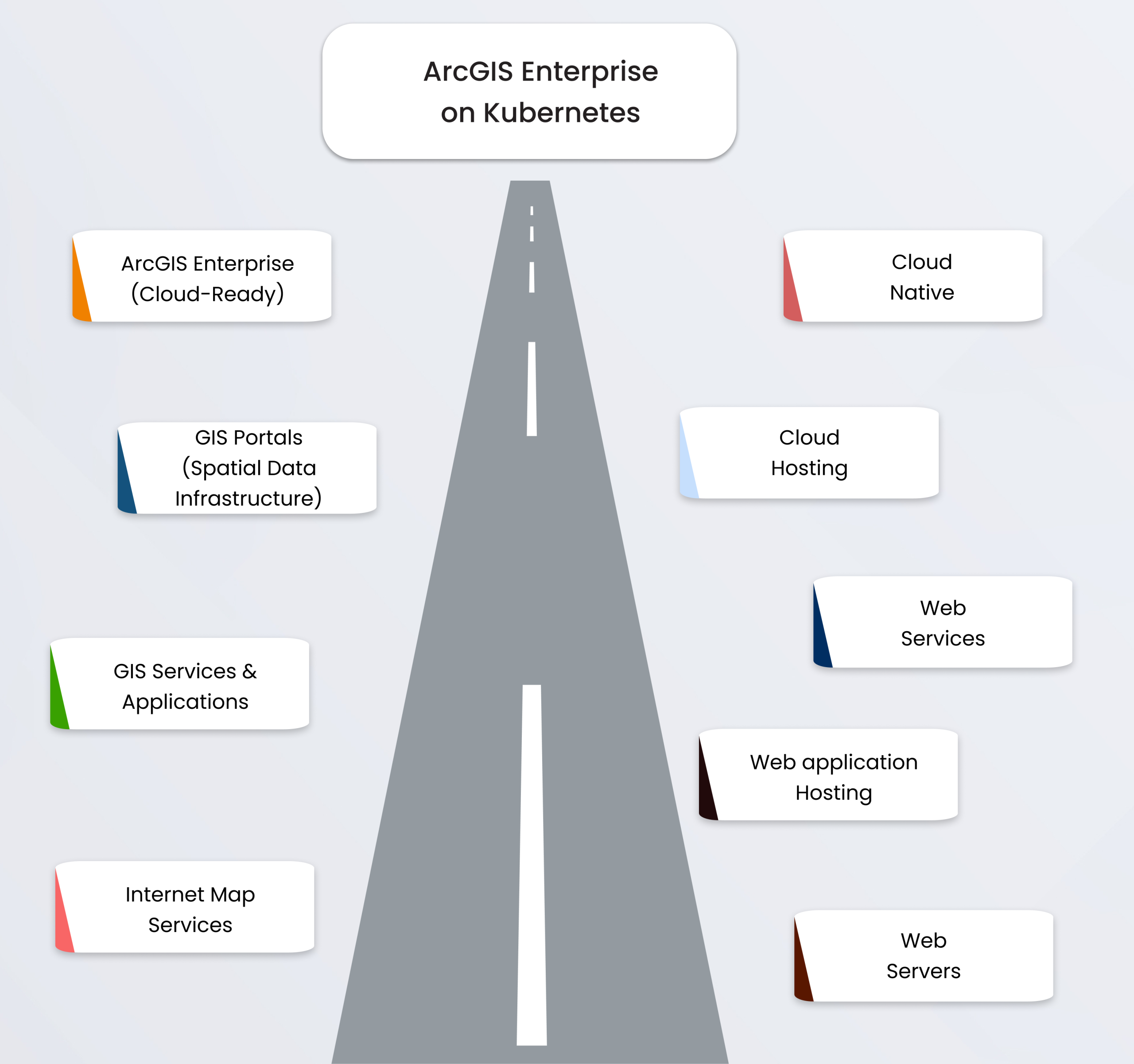
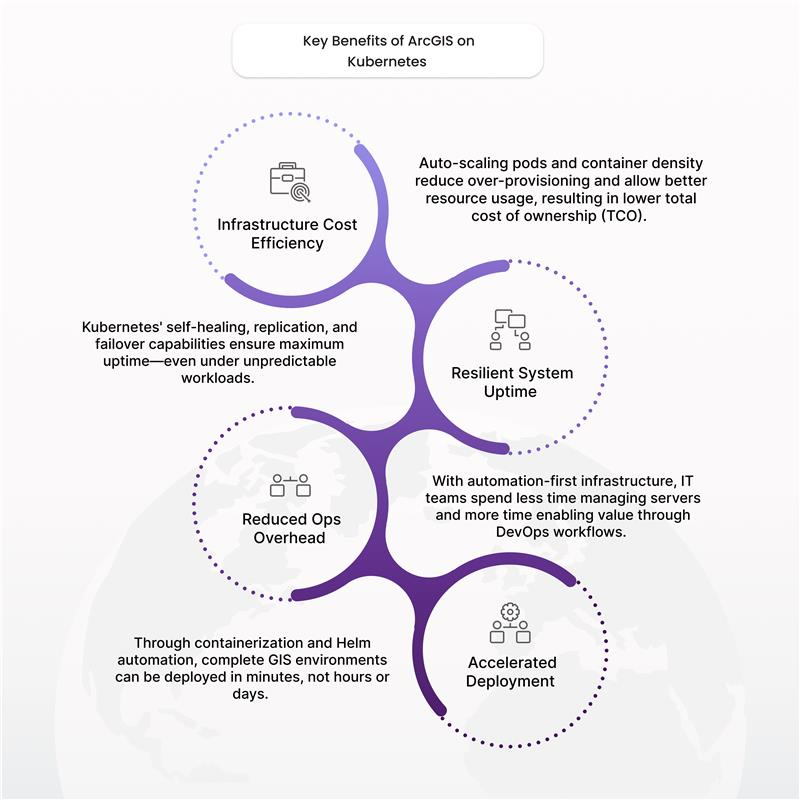
With ArcGIS Enterprise 11.4 on Kubernetes, Esri has redefined how modern GIS systems should be architected—cloud-native, scalable, and resilient by design. For organizations building smart infrastructure, deploying real-time geospatial analytics, or seeking multi-environment portability, Kubernetes provides the operational agility needed for today’s demands and tomorrow’s growth.
Nimisha Srivastava is a Pre-Sales Consultant who is enthusiastic about the Geospatial field and has great communication skill. She has an year’s experience in the geospatial industry and is always eager to learn new things.